
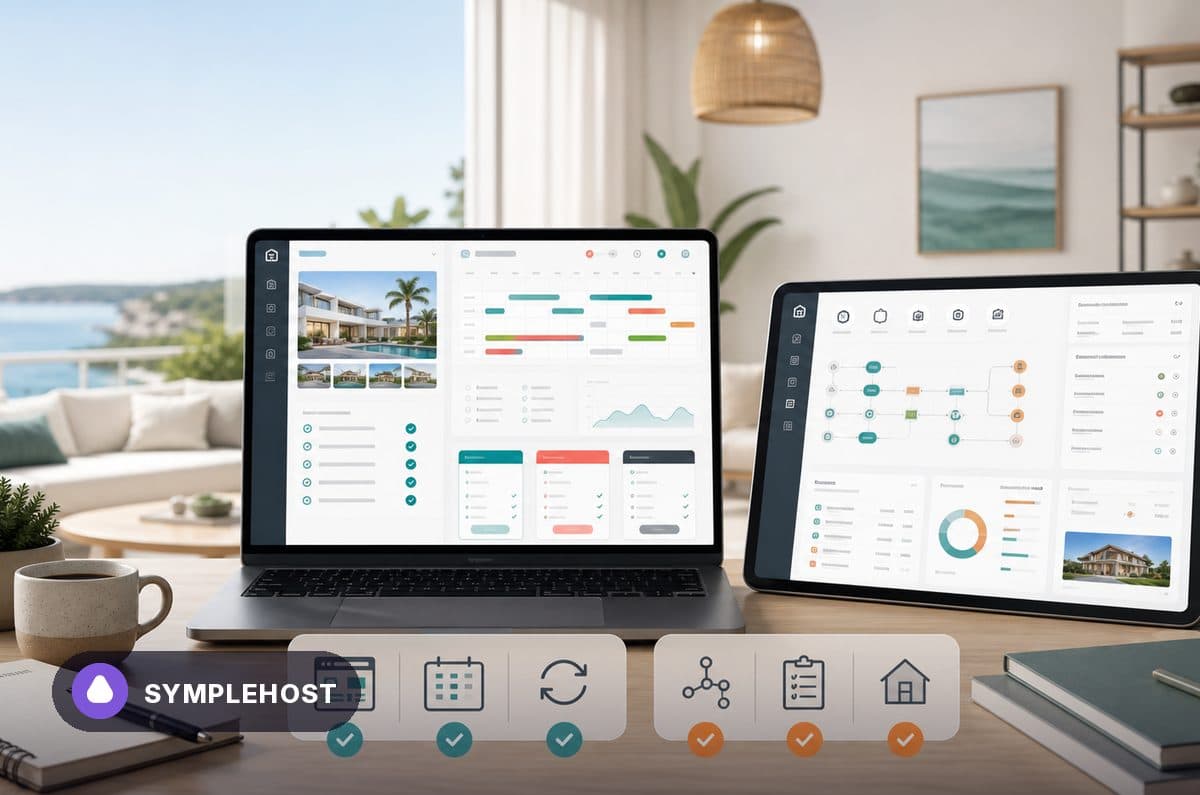
An Airbnb co-host is a person the listing owner brings in to help run the rental — answering guest messages, managing the calendar, coordinating cleaning, and handling problems when they come up. Airbnb has a formal co-host feature that lets an owner grant another account permission to manage their listing, but "co-hosting" is bigger than the button: it's the whole arrangement of delegating the day-to-day work of hosting to someone else.
This guide covers what co-hosts actually do, what they charge, how to add or become one, what belongs in a co-host agreement — and the question more hosts are asking in 2026: when does an AI co-host make more sense than a human one?
What does an Airbnb co-host do?
The scope varies by arrangement, but a full-service co-host typically covers:
- Guest communication — inquiries, booking questions, check-in instructions, mid-stay requests, and review follow-ups, often at all hours and in whatever language the guest writes in
- Calendar and pricing — keeping availability accurate across platforms and adjusting nightly rates for seasons, events, and demand
- Turnover coordination — scheduling cleaners between stays, confirming the property is guest-ready, restocking essentials
- Problem handling — lockouts, wifi outages, noise complaints, refund questions, and the occasional 2am emergency
- Listing upkeep — photos, descriptions, amenity updates, and responding to platform changes
A lighter arrangement might cover messaging only; a heavier one can look like full property management under a different name.
What does a co-host cost?
Most human co-hosts charge a percentage of booking revenue, commonly reported in the 10–25% range, with the rate tracking the scope: messaging-only arrangements sit at the low end, full-service arrangements (guest comms + turnovers + pricing + emergencies) at the high end. Some co-hosts instead charge a flat monthly fee per listing, and family-or-friend arrangements are often informal or unpaid.
Two things to check before agreeing on a rate:
- What revenue is the percentage of? Gross booking revenue including cleaning fees, or net of platform commissions? On a $4,000/month listing, that definition moves real money.
- What's out of scope? Maintenance runs, guest damage claims, and restocking costs are usually billed separately — the agreement should say so.
How to add a co-host on Airbnb
Airbnb's built-in co-host feature works like this:
- Open your listing in the Airbnb app or website
- Go to Listing editor → Co-hosts (under your listing's settings)
- Invite your co-host by email
- Choose their permission level — Airbnb lets you control whether a co-host can manage the calendar, message guests, or access payouts
The co-host accepts the invitation from their own Airbnb account and appears on the listing. Note that Airbnb's feature only covers Airbnb — if you also list on Booking.com, Vrbo, or other OTAs, the co-host needs access to those platforms separately, which is one reason many co-hosting arrangements end up running through a channel manager instead.
How to become an Airbnb co-host
Co-hosting is one of the most common ways into the short-term rental business without owning property:
- Start with hosts you know. Most co-hosting relationships begin informally — a neighbour who travels, a friend with a second home, a local owner drowning in messages.
- Define your service tiers. Messaging-only, messaging + turnovers, or full service — with a rate for each.
- Put the agreement in writing (see the next section). Even between friends.
- Build systems early. The co-hosts who scale past 3–4 properties all systematize: message templates, cleaning checklists, pricing rules — or software that does those layers for them.
- Collect reviews. Great guest reviews on the listings you run are your portfolio for the next owner.
What belongs in a co-host agreement
A co-host agreement doesn't need to be long, but it should answer, in writing:
- Scope — exactly which tasks the co-host owns (messaging, pricing, turnovers, emergencies) and which stay with the owner
- Compensation — the rate, what it's a percentage of, when it's paid, and what's billed separately
- Access — which accounts and permission levels the co-host gets (Airbnb co-host access, other OTA logins, smart locks, payment visibility)
- Expenses — who pays for consumables, minor repairs, and emergency purchases, and up to what limit without approval
- Guest issues — authority to issue refunds or discounts, and to what cap
- Term and exit — notice period, and what gets handed back (accounts, guest history, reviews, keys) when it ends
Keep it in plain language, agree on it before the first guest arrives, and treat it as a working document you revisit when the arrangement changes. This is general guidance, not legal advice — have a local professional review anything you intend to rely on.
Human co-host vs AI co-host: which do you need?
The honest way to decide is to look at why hosts hire co-hosts. Most of the job is response work: answering the same twenty questions, adjusting prices to demand, dispatching cleaners on a schedule, escalating the rare real problem. That's exactly the work an AI does well — which is why the AI co-host category exists.
A human co-host is the right call when the property needs physical presence: greeting guests in person, handling maintenance hands-on, staging and photography, or local judgment calls software can't make.
An AI co-host is the right call when the work is digital: it reads every guest message and replies in the guest's language — whatever they speak — pulls live reservation details, adjusts prices with demand, triggers cleaning tasks after checkout, and escalates to you only when a human decision is actually needed. And because it sits on top of your whole operation, you can simply ask it things a human co-host would know: how are my listings doing this month? Who checks in this week? What tasks are still open? It costs from $15–$20 per listing per month rather than 10–25% of revenue, works across every OTA at once, and never sleeps through a 2am lockout message.
Plenty of operators run both: a person for the physical layer, AI for the always-on digital layer. On a $4,000/month listing, the difference between a 20% co-host fee and a $20-per-listing subscription is about $9,300 a year — worth running for your own numbers.
Frequently asked questions
What is a co-host on Airbnb? A co-host is someone the listing owner authorizes to help run their Airbnb — typically handling guest messages, calendar and pricing, cleaning coordination, and guest issues. Airbnb has a built-in co-host feature that grants another account permission to manage a listing, with the owner controlling the permission level.
How much do Airbnb co-hosts get paid? Human co-hosts most commonly charge a percentage of booking revenue, typically reported between 10% and 25% depending on scope — messaging-only at the low end, full-service at the high end. Some charge flat monthly fees per listing instead. Always agree in writing on what the percentage applies to and what's billed separately.
Can a co-host manage listings on other platforms too? Airbnb's co-host feature only covers Airbnb. For listings on Booking.com, Vrbo, Agoda, and other OTAs, a co-host needs separate access — which is why multi-platform hosts usually run co-hosting through a channel manager with its own team access instead of per-platform permissions.
What is an AI co-host? An AI co-host is software that does the co-host's digital work autonomously: reading and answering guest messages in the guest's own language, syncing calendars across OTAs, adjusting prices with demand, and triggering cleaning and maintenance tasks — escalating to the host only when a human decision is needed. It also works like a co-host you can talk to: ask how your listings are performing, who's checking in this week, or what's on the task list, and it answers from your live data. SympleHost is built as exactly this, from $15–$20 per listing per month, with a 14-day free trial.
Do I still need a co-host if I use short-term rental software? For the digital work — messaging, pricing, calendars, task dispatch — modern AI-based software covers what most co-hosts are hired for. You'll still want a person (a cleaner, a handyman, or a local contact) for physical tasks. Many hosts find that pairing local help with an AI co-host replaces a percentage-fee arrangement entirely.
Related Reads
あなたの共同ホストは、眠らない。だから、あなたは眠れる。
SympleHostを14日間お試しください。カード登録が必要です。初期費用は不要、いつでもキャンセルできます。オンライン通話での初期設定サポートもご利用いただけます。