
What Airbnb Changes on 20 November 2026, and What Indian Hosts Should Do
By Shashank Udyawar, India Operator Specialist, SympleHost
Running a short-term rental like a business · November 16, 2026 · 9 min read
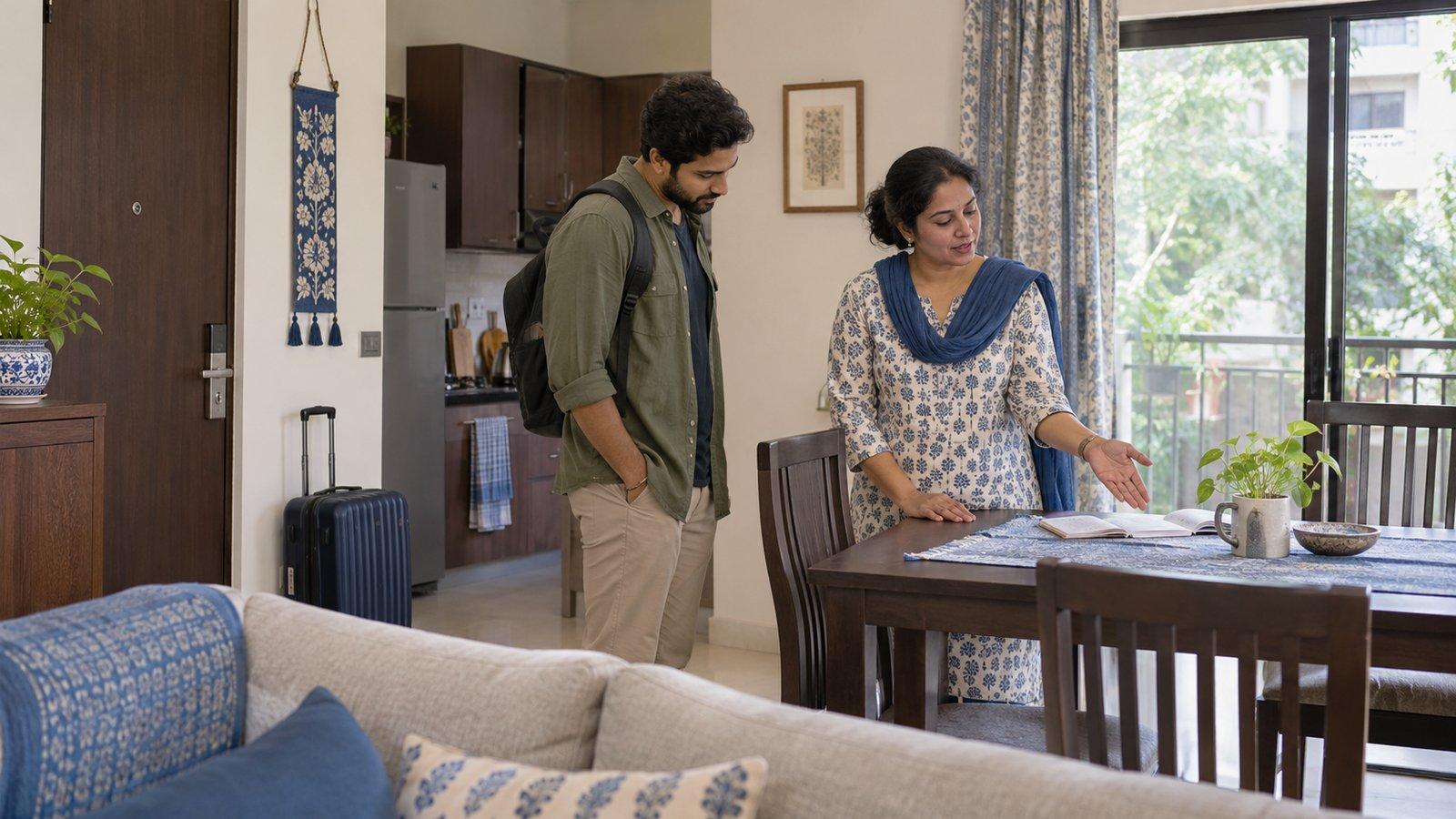
It's 22 November. A family from Bengaluru books your three-bedroom Goa villa on Airbnb for New Year: three nights at ₹18,000, so ₹54,000 before fees. Your house rules still say what they've said for two years. "₹5,000 fine for smoking indoors." "Please WhatsApp Aadhaar or passport copies for every guest 24 hours before arrival." "Strip the beds and take the rubbish to the bin outside the gate." "Please leave us a Google review." This booking was made after 20 November, so Airbnb's new policies apply to it, and every one of those four lines now breaks them. Here's what changed, what still works for Indian hosts, and what to fix before Airbnb's review reaches your listings.
The short version
- The new rules apply by booking date, not stay date. Anything booked on or after 20 November 2026 follows them, even a stay in March 2027. Earlier bookings keep the old rules.
- Host fines are out. You can't fine or penalise guests. You can only tell guests about fines that a local government or housing society might charge.
- Checkout tasks must be light. Guests can put used dishes in the sink, gather towels and sort rubbish into indoor bins. They can't be asked to wash dishes, strip beds or take rubbish off-site.
- No ID copies or contact details by default. You can check ID in person at check-in if your listing says so, but you can't keep a copy unless the law requires it. Form III for foreign guests is a legal requirement, so it falls under the exception, if you disclose it before booking.
- Separate rental agreements and outside reviews are mostly off the table. Contracts are allowed only in limited cases, such as stays of 28 nights or more. Asking guests to review you on Google or another site is not allowed unless you're a hotel.
- Airbnb is reviewing listings from 20 November to the end of March 2027. If a rule doesn't fit, you get an email and at least 20 days to change it or appeal once.
What actually changes on 20 November 2026
Airbnb announced the changes on 20 October 2026 in its Resource Centre post, Important changes to house rules. Two policies take effect together:
- Reasonable house rules, which sets what you can ask guests to do during and at the end of a stay.
- Limiting host-imposed contracts and other requirements, which replaces the old Off-Platform Policy and sets what you can ask guests to sign, share or install.
Both apply to reservations booked on or after 20 November 2026. A booking made on 19 November for a January stay still follows the old rules. A booking made on 20 November for the same dates follows the new ones. For a few months you'll have both kinds of guest in your calendar at once.
Your house rules now come from a fixed list, plus "Additional rules"
Airbnb now gives every listing seven standard house rules:
- maximum overnight guests
- quiet hours
- events
- pets
- smoking, including vaping
- commercial photography
- lock up at checkout
Anything else you write goes under Additional rules (previously called "Requests"), and it must be reasonable. The separate checkout instructions section is gone from the listing editor. "Lock up at checkout" is now a standard rule, and other checkout requests, such as switching off the AC, move into Additional rules under "Before checkout".
Every rule has to be in the house rules section before the guest books. Airbnb's policy says you can't add new rules through messages, signs in the home or in person. In practice, that means your WhatsApp welcome message and your printed guidebook can repeat your rules, but they can't add new ones.
Checkout tasks: what you can still ask
Airbnb's own examples draw the line clearly:
| Area | You can ask guests to | You can't ask guests to |
|---|---|---|
| Dishes | Put used dishes in the sink | Wash or put dishes away |
| Laundry | Gather used towels | Strip beds or start a wash |
| Rubbish | Sort rubbish and recycling into indoor bins | Take rubbish off-site |
| Utilities | Turn off the AC when leaving | Stop using a listed amenity |
The general test is whether the task takes significant time or effort, or is something a cleaner would normally do. Airbnb says it considers local context and can grant exceptions, such as limits on shower time during drought restrictions.
No fines, no extra charges for advertised amenities
You can't impose fines or penalties on guests. A "₹5,000 smoking fine" or "₹2,000 for late checkout" rule doesn't survive. If your housing society or local authority can fine for something, such as noise after a set hour, you can tell guests about that in the listing. You also can't restrict a feature you advertise, or charge extra for it beyond the booking price. Optional add-ons, such as breakfast, are still fine to mention.
If a guest does break a house rule during the stay, or tells you before check-in that they intend to, Airbnb says you can cancel without fees or other consequences.
Personal data: no ID copies, no contact details, with exceptions
This is the change that matters most in India, where asking for Aadhaar or passport copies on WhatsApp before arrival is common. Under the new policy, you generally can't request:
- contact details
- identity documents
- financial information beyond Airbnb's pricing rules
- background or credit checks
- biometric or health data
You can check a guest's ID in person at check-in, as long as your house rules say you will. You can't keep a copy, digital or paper, unless an exception applies.
Wi-Fi login pages that ask for an email address or other personal details are also out, unless the listing is a hotel or resort, or an exception applies.
Apps, contracts and reviews
- Apps: you can't require guests to register on another app or website to get in or to use a critical amenity. A keyless entry app is only fine if there's another way in on request. Optional apps are fine.
- Rental agreements: you generally can't require a separate contract. The exceptions are legal, housing society or insurance requirements, optional amenities (Airbnb's example is a golf buggy), stays of 28 nights or more, and Airbnb Luxe listings. Allowed contracts are uploaded under "Contracts" in your listing settings, and Airbnb doesn't enforce them for you.
- Reviews: you can't ask guests to review the stay or fill in a survey on another website, unless the listing is a hotel. That includes the "please leave us a Google review" card on the fridge.
- Local recommendations: still allowed, if they're optional and you disclose any money you make from them.
Who this affects most in India
Homestays and villas that collect ID before arrival. If your process is "send passport and Aadhaar photos on WhatsApp", that step breaks for every Airbnb booking made from 20 November, unless a legal requirement covers it.
Hosts with foreign guests. Indian law requires you to report foreign guests. Since 1 September 2025 the form is Form III (formerly Form C), filed on e-FRRO within 24 hours of arrival. Airbnb's own FRRO guidance for hosts in India also says hosts must keep guest registers, with separate registers for Indian and foreign guests. Airbnb's new policy allows data collection where it's needed to comply with the law. But you must:
- say what you need and why, in your house rules, before the guest books;
- collect no more than the law requires;
- store it securely and dispose of it safely once you no longer need it.
Airbnb may ask you for evidence that the exception applies. If your state or local police require more than Form III and the register, keep a copy of the actual order. That's what an appeal would rest on.
Operators who run a fines-and-deposit model. Villa operators who use a signed agreement, a fine schedule and an off-platform deposit to manage risk lose most of that toolkit on Airbnb bookings. Check that your listing price and cleaning fee cover the work your team now does at checkout, because guests will no longer strip beds or take rubbish out.
Hosts who chase Google reviews. Asking Airbnb guests for a review elsewhere is no longer allowed for most listings. Collect Google reviews from your direct and repeat guests instead.
What to do this week, step by step
1. List every rule you currently send. Go beyond the house rules section. Check your welcome message, check-in instructions, WhatsApp templates, guidebook, signs in the property and any rental agreement. Each rule needs to end up in one place: Airbnb's house rules section.
2. Move what fits into the seven standard rules. Guest count, quiet hours, events, pets, smoking, photography and lock-up all have their own setting now.
3. Rewrite checkout requests to Airbnb's line. "Put used dishes in the sink, gather towels in the bathroom, sort rubbish into the kitchen bins, switch off the AC and lock up." Then tell your housekeeping team that stripping beds and taking rubbish out is back on their list.
4. Delete fines. Replace "₹5,000 fine for smoking" with a plain no-smoking rule. If your housing society charges fines, say so in the section Airbnb provides for it.
5. Fix your ID step. For Indian guests, switch to an in-person ID check at check-in and say so in your house rules. Don't keep a copy. For foreign guests, add a line to your house rules explaining that Indian law requires you to collect passport and visa details for Form III within 24 hours of arrival. Our Form C (Form III) filing guide covers the e-FRRO steps.
6. Retire the rental agreement for short stays. Keep it only if one of Airbnb's exceptions applies, such as a 28-night-plus stay, and upload it under "Contracts".
7. Remove review requests for other sites from your guidebook, messages and signs.
8. Do it for every listing, not one. If you run 20 villas, a rule copied into each listing 20 times needs fixing 20 times. Keep one master version of your rules, update it once, then paste it into each listing.
9. Watch your email and the "Required action" card. Airbnb reviews listings from 20 November to the end of March 2027. If a rule doesn't fit, you'll get an email and an in-app notice with at least 20 days to update it or appeal. You can only appeal once, so attach the actual ordinance or housing society rule when you do.
What happens if you don't change anything
It depends on which rule breaks the policy:
- House rules and requests (fines, heavy chores): Airbnb starts with education and a request to update the listing, then warnings. If the issue continues, guests can see a notice on your listing page, and your listing can show up less in search.
- Personal data, required apps, contracts and outside reviews: warnings, then suspension or removal of the listing. Repeat offences can lead to suspension or removal of your account.
For an operator with many listings, that second group is the real risk. One ID-collection message used across every listing is one problem repeated many times.
Where SympleHost fits
Airbnb's house rules live in Airbnb's listing editor, and you change them there. SympleHost doesn't rewrite them for you. Where it helps is everything around them:
- One inbox for guest messages from Airbnb, Booking.com, MakeMyTrip and other channels, including two-way WhatsApp. When you change your check-in and checkout wording, you change your saved replies once, not in five apps.
- Channel manager built in. Airbnb, Booking.com, MakeMyTrip, Agoda, Expedia, Trip.com and Vrbo connect by API (MakeMyTrip also covers Goibibo), with Traveloka and Tiket.com on request. Other sites can connect by calendar link.
- Your own direct-booking website, included. Airbnb's policies govern Airbnb bookings, so guests who book you directly are covered by your own terms, which is also where you can ask happy guests for a Google review.
Pricing is published in rupees: ₹599 per listing a month, plus ₹199 a month per unit for room types with two or more units, plus GST. There's no setup fee and no commission on your bookings. Start a 14-day free trial.
One thing that hasn't changed on 20 November: Airbnb's 15.5% single host fee. Indian hosts already moved to it by 15 September 2026. If you haven't repriced since, our rupee maths on the host fee shows the increase you need.
Frequently asked questions
When do Airbnb's new house rules start? They apply to every reservation booked on or after 20 November 2026, whatever the stay dates. Bookings made before 20 November keep the previous rules, even if the stay is months later.
Can I still ask Airbnb guests for Aadhaar or passport copies in India? Not by default. You can check ID in person at check-in if your house rules say so, but you can't keep a copy unless an exception applies. Collecting passport and visa details for a foreign guest's Form III is a legal requirement, so it qualifies, provided you disclose it in your house rules before booking, collect only what's required and store it securely.
Can I still charge guests a fine for smoking or late checkout? No. Airbnb's policy says hosts can't impose fines or penalties. You can tell guests about fines a local authority or housing society might charge. If a guest breaks a house rule during the stay, you can cancel the reservation without fees.
What checkout tasks can I ask Airbnb guests to do? Light ones: put used dishes in the sink, gather used towels, sort rubbish into indoor bins, turn off the AC and lock up. You can't ask guests to wash dishes, strip beds, start laundry or take rubbish off-site.
Can I ask Airbnb guests to sign a rental agreement? Only in limited cases: where the law, a housing society or your insurer requires it, for an optional amenity, for stays of 28 nights or more, or on Airbnb Luxe listings. The agreement must be disclosed in the listing and uploaded under "Contracts" in your listing settings.
What happens if Airbnb flags one of my house rules? You get an email and an in-app "Required action" card, with at least 20 days to update the rule or submit an appeal. You can appeal once, with supporting documents such as a local order or housing society rule. If the appeal is refused and you keep the rule, guests may see a notice on your listing.
Related Reads
- India's Guest Registration Rules Are Tightening: What Hosts Need in Place Now
- How to File Form C (FRRO) for Your Homestay: 2026 Guide
- Airbnb's 15.5% Host Fee in India (2026): The Rupee Maths and How to Reprice
- Double Booked on Airbnb and Booking.com in India? What to Do in the First Hour
- How to Build an Airbnb Guest Experience Guidebook
Built for Indian property managers.
Start your 14-day trial — business email and card required, cancel anytime. Or book a call and we will wire MakeMyTrip, WhatsApp, and your first properties with you.